


What is the adaptability of a dock leveler to different dock heights?
As a dock leveler supplier, I've witnessed firsthand the vital role that dock levelers play in ensuring seamless operations at loading docks. One of the key considerations when selecting a dock leveler is its adaptability to different dock heights. In this blog, I'll delve into the various aspects of this adaptability, exploring the technology, benefits, and practical implications.
Understanding the Basics of Dock Levelers
Dock levelers are essential equipment at loading docks, bridging the gap between the dock and the truck bed. They provide a smooth transition for forklifts and other material handling equipment, enabling efficient loading and unloading of goods. There are several types of dock levelers available in the market, including mechanical, hydraulic, and air-powered models. Each type has its own unique features and advantages, but they all share the common goal of adapting to different dock heights.
The Importance of Adaptability
The ability of a dock leveler to adapt to different dock heights is crucial for several reasons. Firstly, it allows for compatibility with a wide range of trucks and trailers, which come in various sizes and heights. This flexibility ensures that the dock leveler can be used with different types of vehicles, regardless of their specific dimensions. Secondly, adaptability helps to optimize the loading and unloading process. By providing a level surface between the dock and the truck bed, dock levelers minimize the risk of damage to goods and equipment, as well as reduce the potential for accidents and injuries. Finally, adaptability is essential for maintaining the efficiency and productivity of the loading dock. A dock leveler that can quickly and easily adjust to different dock heights allows for faster turnaround times, which can significantly improve the overall throughput of the facility.
How Dock Levelers Adapt to Different Dock Heights
There are several mechanisms that dock levelers use to adapt to different dock heights. One of the most common methods is through the use of adjustable legs or hydraulic cylinders. These components allow the dock leveler to be raised or lowered to match the height of the truck bed. Some dock levelers also feature a telescopic lip that can be extended or retracted to bridge the gap between the dock and the truck. This lip can be adjusted to accommodate different distances, ensuring a smooth transition for forklifts and other equipment.
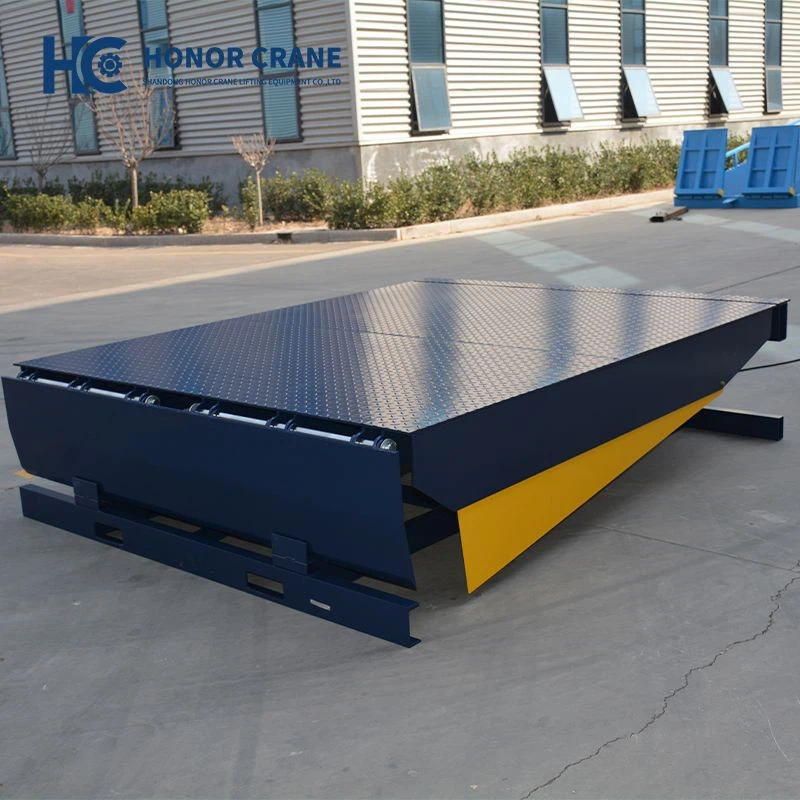

Another important factor in the adaptability of dock levelers is the range of height adjustment. Most dock levelers are designed to accommodate a certain range of heights, typically between -150mm and +300mm. This range allows for flexibility in handling different types of trucks and trailers, as well as variations in dock heights. However, it's important to note that the actual range of adjustment may vary depending on the specific model and manufacturer.
Types of Dock Levelers and Their Adaptability
As mentioned earlier, there are several types of dock levelers available in the market, each with its own unique features and advantages. Let's take a closer look at the adaptability of each type:
-
Mechanical Loading Dock: Mechanical dock levelers are the most basic type of dock leveler. They are operated manually, using a lever or a crank to raise and lower the platform. While mechanical dock levelers are relatively simple and cost-effective, they have a limited range of height adjustment. They are typically suitable for docks with consistent truck heights and low to moderate traffic volumes. Mechanical Loading Dock
-
Loading Ramp Platform: Loading ramp platforms are another type of dock leveler that provides a fixed height surface for loading and unloading. They are typically used in conjunction with a dock leveler to provide additional support and stability. Loading ramp platforms can be adjusted to different heights, but they are not as flexible as other types of dock levelers. They are suitable for docks with a limited range of truck heights and low to moderate traffic volumes. Loading Ramp Platform
-
Hydraulic Dock Leveller: Hydraulic dock levelers are the most advanced type of dock leveler. They are powered by a hydraulic system, which allows for smooth and precise height adjustment. Hydraulic dock levelers have a wide range of height adjustment, typically between -300mm and +450mm. They are suitable for docks with a wide range of truck heights and high traffic volumes. Hydraulic Dock Leveller
Factors to Consider When Choosing a Dock Leveler
When choosing a dock leveler, there are several factors to consider, including the range of height adjustment, the type of operation, the traffic volume, and the budget. Here are some key considerations to keep in mind:
- Range of Height Adjustment: As mentioned earlier, the range of height adjustment is an important factor to consider when choosing a dock leveler. Make sure to choose a dock leveler that can accommodate the range of truck heights that you typically encounter at your dock.
- Type of Operation: The type of operation at your dock will also influence your choice of dock leveler. If you have a high volume of traffic, you may want to consider a hydraulic dock leveler, which can provide faster and more efficient operation. If you have a low volume of traffic, a mechanical dock leveler may be sufficient.
- Traffic Volume: The traffic volume at your dock is another important factor to consider. If you have a high volume of traffic, you may want to choose a dock leveler that can handle the load and provide reliable performance. If you have a low volume of traffic, a less expensive and simpler dock leveler may be sufficient.
- Budget: Finally, your budget will also play a role in your choice of dock leveler. Hydraulic dock levelers are typically more expensive than mechanical dock levelers, but they offer greater flexibility and performance. Make sure to choose a dock leveler that fits your budget and meets your needs.
Conclusion
In conclusion, the adaptability of a dock leveler to different dock heights is a crucial factor in ensuring the efficient and safe operation of a loading dock. By choosing the right dock leveler, you can optimize the loading and unloading process, minimize the risk of damage to goods and equipment, and improve the overall productivity of your facility. As a dock leveler supplier, I'm committed to providing high-quality products and services that meet the needs of our customers. If you have any questions or need more information about our dock levelers, please don't hesitate to contact us. We look forward to working with you to find the best solution for your loading dock.
References
- "Dock Leveler Selection Guide," Material Handling Industry of America.
- "Hydraulic Dock Levelers: How They Work and Why You Need One," Forklift Operator.
- "Mechanical Dock Levelers: A Cost-Effective Solution for Your Loading Dock," WarehouseIQ.