< img height="1" width="1" style="display:none" src="https://www.facebook.com/tr?id=4535971103301525&ev=PageView&noscript=1" />
Shandong Honor Crane Lifting Equipment Co., Ltd.
+8619053819325
Your Professional Loading Ramp Manufacturer & Supplier


Shandong Honor Crane Lifting Equipment Co., Ltd, established in 2014, is a specialized manufacturer dedicated to the R&D, production, and global sales of lifting equipment. Boasting a modern manufacturing facility spanning over 3,000 square meters, we possess an annual production capacity exceeding 1,000 sets of lifting equipment. Our product range includes:Hydraulic Scissor Lifts, Mobile Scissor Lift Platforms, Self-Propelled Scissor Lifts, Electric Forklift Truck, Dock Levelers, Customized Lifting Platforms.

 
First 12 Last 1/2
 

Why Choose Us


Advanced Equipment

We are equipped with CNC cutting machines, automated welding systems, hydraulic testing systems, painting production lines, and load testing equipment, thereby ensuring precision in our manufacturing processes and stability in product quality.


Quality Control

From raw material selection, structural fabrication, and hydraulic assembly to final inspection and testing, every stage is subject to rigorous management and control to ensure product safety, durability, and stable long-term performance.


Global Market Experience

Our products are exported to numerous regions—including Europe, Southeast Asia, the Middle East, South America, and Africa—allowing us to accumulate extensive experience in cross-regional technical adaptation, localized service provision, and regulatory compliance.


Specification


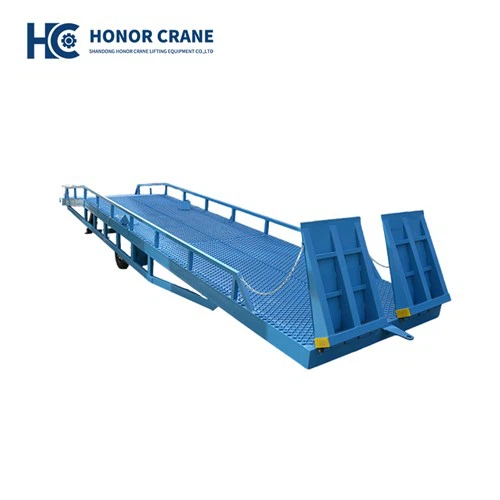
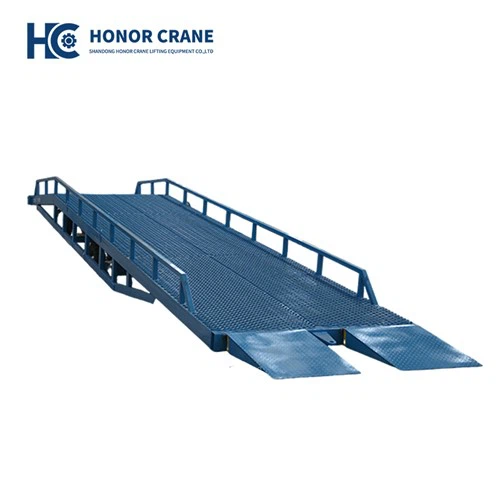
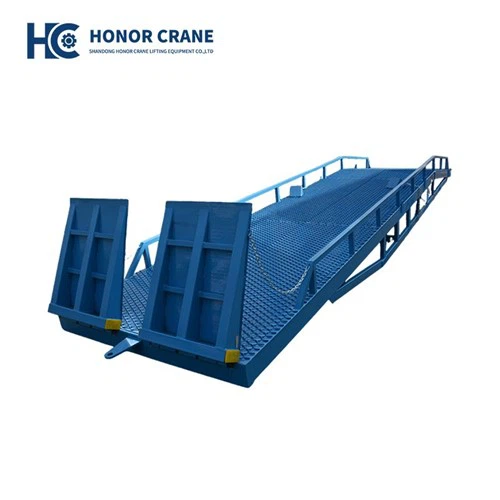
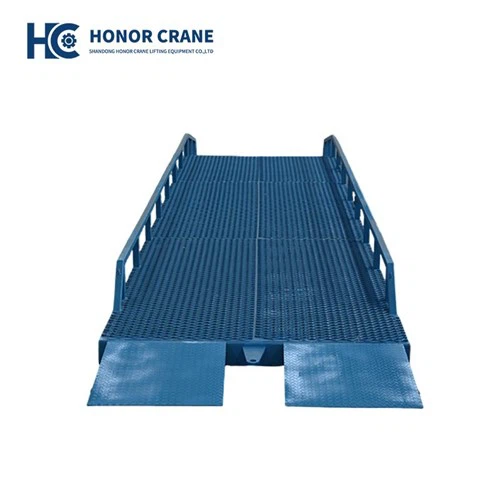
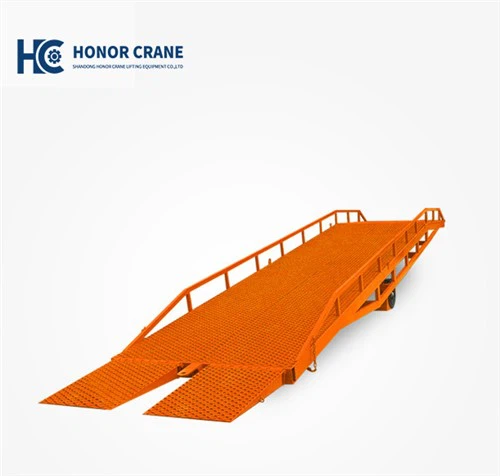
Hydraulic Mobile Yard Ramp

Specification

Maximum Load Capacity

6 tons

Overall Dimension (Length)

11m

Overall Dimension (Width)

2m

Overall Dimension (Height)

1.1m

Ramp Dimension (Length)

7.15m

Ramp Dimension (Width)

2m

Lifting Range

1100~1700mm

Equipment Gross Weight

2250kg


Advantages of Loading Ramp


Enhanced Operational Flexibility
Unlike stationary dock levelers, loading ramps can be easily relocated to any desired position. Whether you're unloading containers in an open yard or repositioning the ramp for different truck heights, this equipment offers unmatched adaptability. It gives warehouse managers the freedom to adjust operations based on daily needs without being confined to a fixed loading dock.
Cost-Effective Dock Solution
Constructing a permanent loading dock can be expensive and time-consuming. A mobile ramp offers a more affordable alternative, especially for growing businesses or temporary loading sites. With a one-time investment, companies can solve multiple loading challenges across different locations—saving both time and money.
Hydraulic Height Adjustment
Most loading ramps are equipped with a manual or electric hydraulic system that allows easy height adjustment. This feature ensures smooth alignment with various truck or container bed heights, improving forklift access and minimizing the risk of operational delays.
Improved Safety and Load Stability
Mobile ramps are built with safety in mind. Features like anti-slip surfaces, side guard rails, and locking chains help stabilize the ramp during operation and protect both workers and goods. The structure is typically designed to handle heavy-duty loads, ensuring safety even under intense daily usage.
Increased Productivity and Efficiency
With a loading ramp, forklifts can drive directly into containers or trucks to load and unload cargo quickly. This significantly reduces manual labor and loading time, enabling faster turnaround for delivery vehicles. The result is higher productivity and smoother warehouse workflows.


Types of Loading Ramp


Mobile Loading Ramps

If your operation requires a lot of mobility and adaptability, mobile loading ramps can greatly increase productivity. Mobile loading ramps usually use heavy-duty wheels and castors to gain a degree of portability, and they often have a lighter weight construction to make them movable.

Heavy Duty Ramps

Loading ramps that are designed to be exceptionally durable and support massive amounts of weight are considered heavy duty. These heavy duty ramps require low levels of maintenance and have a wide variety of uses due to their superior degree of safety.

Mobile Dock Ramp


Key Components of Loading Ramp


Component

Description

Ramp Body

The main inclined surface that supports vehicle and cargo movement

Hydraulic System

Lifts or adjusts platform height (in hydraulic models)

Anti-Slip Deck

Patterned or serrated steel surface for traction

Support Legs / Frame

Ensures the ramp stays stable during loading

Safety Chains / Locks

Connects the ramp securely to the truck or dock

Wheels (Mobile Types)

Allows easy movement of the ramp to different locations


Industry-Specific Applications of Loading Ramp
 
01/

Warehousing and Distribution
Warehouses depend on loading ramps for transferring pallets, freight, and equipment. Adjustable and modular ramps give facilities the flexibility to shift loading points based on workflow requirements.
Using the correct ramp type minimizes manual labor while expediting the movement of goods between storage and transport vehicles.

02/

Construction and Heavy Equipment Transport
Construction firms require ramps built to support substantial loads. Moving backhoes, skid steers, and cranes onto trailers demands precision.
Heavy-duty ramps reduce the risk of damage to machinery and help the crews complete transfers efficiently. Selecting a ramp with reinforced support prevents complications during high-weight transfers.

03/

Agriculture and Farming Operations
Farmers use ramps for loading tractors, harvesters, and livestock transport. Seasonal demands require adaptable solutions, making portable ramps a smart choice for agricultural needs. Durable materials withstand exposure to outdoor conditions, guaranteeing continued performance in all different weather situations.

04/

Automotive and Vehicle Shipping
Car dealerships, rental agencies, and auto manufacturers use ramps for vehicle transport. Whether moving cars between facilities or preparing them for shipment, ramps allow easy access to transport carriers. Non-slip surfaces prevent tire slippage, reducing risk during vehicle transfers.

05/

Manufacturing and Industrial Facilities
Factories rely on ramps to move raw materials and finished goods. Custom ramp solutions accommodate unique production layouts, allowing businesses to optimize space while maintaining safety.

06/

Event and Entertainment Logistics
Concert and film production crews move large sets, lighting rigs, and sound equipment using ramps designed for easy transport. Temporary stage setups also require quick loading solutions. Portable ramps provide flexibility, allowing crews to manage logistics efficiently.


Tips for Using Loading Ramp
 

Work on a Level Surface
Whenever possible, you should work on a level surface. Your trailer deck should be parallel with the ground and the ends of the ramps touching the ground should not be lower than the trailer's rear wheels. A level surface provides for maximum efficiency during the loading process. It also reduces the risks of the load tipping backward or falling off the side of the ramps.


Watch the Load Angle
As efficient as loading ramps are compared to direct lifting, they are not capable of working miracles. Loading can be terribly unsafe if the ramp angle is too high. Therefore, watch the load angle. Keep it as low as possible on every single job.
This might facilitate purchasing new loading ramps if your current set is too short. Also bear in mind that you will need longer ramps and a lower angle for heavier loads.


Send the Drive Wheels First
It doesn't matter which direction you load all-wheel drive vehicles in. But if you're loading a vehicle with only two-wheel drive, send the drive wheels first. This means a front-wheel-drive vehicle goes up the ramp forward; a rear-wheel-drive vehicle goes up in reverse. Again, it is all about physics.


Make Sure Loading Ramps Are Tightly Secured
Even keeping the drive wheels to the front of the load doesn't eliminate all risk of tipping over. There is a point just after the drive wheels reach the deck where the entire setup is inherently unstable. If ramps are not securely fastened to the back of the trailer, they could slip away and send the load crashing to the ground.
Always make sure your loading ramps are properly secured before you begin loading. What's more, don't cut corners here. Loading ramps come with fittings and pins for this very reason – use them for their intended purpose.


Loading Ramp Customization
 

Load Capacity Options

Different load capacities available to meet various loading and unloading requirements.

Ramp Length & Width Customization

Ramp size can be adjusted according to truck height, dock size, and forklift operation space.

Angle & Height Adjustment

Ramp slope and working height can be designed for safe and efficient material handling.

Mobile or Fixed Type

Can be customized as mobile loading ramp or fixed dock ramp based on working site requirements.

Safety Configuration

Optional safety chains, side rails, anti-slip surface, and wheel locks for stable operation.

OEM Service

Logo, color, and packaging can be customized for brand and market requirements.


Packaging and Shipping


Packaging

Wooden pallet

Transportation methods

Sea freight, land transportation, or multimodal shipping


FAQ


Q: What is the purpose of a loading ramp?

A: A loading ramp lets you move goods, pallets, or vehicles easily between surfaces of different heights, improving productivity and safety. Loading ramps are essential for any business that regularly moves freight, heavy equipment, or large quantities of materials.

Q: How does a loading ramp work?

A: A loading ramp works by providing a stable incline that allows for the smooth transfer of goods from a higher to a lower level, or vice versa. For your business, using a loading ramp can reduce the need for forklifts and other expensive equipment, while increasing safety and reducing the risk of worker

Q: What types of loading ramps are commonly used?

A: The most common types include fixed loading ramps, mobile loading ramps, and container loading ramps. Fixed ramps are installed permanently, while mobile ramps can be moved to different loading areas. Container ramps are designed specifically for container access.

Q: What materials are loading ramps made of?

A: Most loading ramps are made from high-strength steel with anti-slip surfaces. Steel provides the necessary load-bearing capacity, while the surface pattern helps prevent slipping in wet or oily working conditions.

As one of the most professional loading ramp manufacturers and suppliers in China, we're featured by quality products and good service. Please rest assured to buy high-grade loading ramp at competitive price from our factory.

(0/10)

clearall