


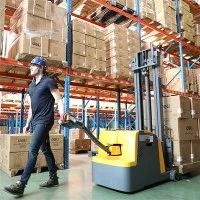

As a crucial piece of equipment for vertical transportation, the quality of routine maintenance of lifting platforms directly impacts operational safety, efficiency, and lifespan. A scientifically sound and standardized maintenance process not only promptly eliminates potential hazards but also significantly reduces the rate of sudden failures, ensuring the equipment maintains optimal performance under various operating conditions.
The first step in routine maintenance is visual and structural inspection. Before and after operation, inspect the platform, guardrails, and steps for damage, check for wear or peeling of the anti-slip layer, and inspect welds and connections for cracks or looseness. For scissor lift or guide rail structures, pay special attention to the wear of hinge pins, rollers, and sliders, promptly removing any attached oil and foreign objects to prevent obstruction leading to poor lifting or uneven force distribution.
The hydraulic and electrical systems are of paramount importance in maintenance. Hydraulic lifting platforms should have their oil level, quality, and pipeline sealing checked regularly. If the oil is cloudy, emulsified, or leaking, it must be replaced immediately, and the tightness of the joints checked. Simultaneously, the working status of the oil pump, valves, and hydraulic cylinders should be checked to ensure there is no abnormal noise or temperature rise. Electric lifting platforms require inspection of the insulation and securing of cables, terminals, and control panels. Dust should be cleaned from the surfaces of contactors and relays to prevent malfunctions or shutdowns caused by poor contact. For battery-powered models, the power display, charging status, and electrode corrosion should also be monitored to avoid affecting drive performance due to low or high power.
Lubrication and maintenance of drive and transmission components are equally important. Hinges, guide rails, lead screws, and other moving parts should be lubricated with the appropriate amount of grease according to the equipment manual to maintain smooth operation and reduce wear. For models using chain or wire rope drives, the tension of the chain links and the condition of the rope strands should be checked. If looseness, broken strands, or corrosion are found, adjustments or replacements should be made promptly to prevent jamming or breakage during lifting.
The cleanliness and protection of the working environment also fall under the scope of routine maintenance. When the platform is used in dusty, humid, or corrosive environments for extended periods, surface contaminants must be cleaned promptly, and rust prevention treatment must be applied to metal parts. For equipment operating in low-temperature environments, monitoring of hydraulic oil viscosity changes is crucial; if necessary, replace with low-temperature compatible oil, and check the functionality of heating or preheating devices.
Furthermore, an equipment maintenance record and inspection system should be established, archiving each inspection, maintenance, and repair to create a traceable management file. Minor anomalies should be addressed promptly to prevent them from accumulating into major malfunctions. Regular maintenance training should be provided to operators to equip them with basic inspection and simple maintenance skills, enabling them to identify problems and take appropriate action immediately during daily use.
In summary, daily maintenance of lifting platforms encompasses multiple dimensions, including structural inspection, hydraulic and electrical maintenance, lubrication maintenance, environmental protection, and systematic record keeping. Only by making maintenance routine and meticulous can we ensure the equipment remains in a safe and reliable operating condition, providing a solid guarantee for efficient operation and safe production.


