


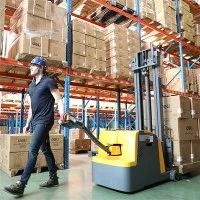

As a crucial piece of equipment for vertical lifting and high-level operations, the scientific and standardized operation methods of lift lifts directly impact operational safety, efficiency, and equipment lifespan. In different application scenarios, reasonable operating procedures and key operational points can effectively leverage the performance advantages of lift lifts and mitigate potential risks.
Preparation before operation is fundamental. The operator should first check the overall condition of the lift lift, including whether the hydraulic system or electric drive unit is functioning normally, whether the lifting chain, mast, or scissor structure is deformed or loose, whether the tire pressure and wear meet requirements, and whether safety devices such as brakes, limit switches, and alarms are effective. Simultaneously, it is necessary to confirm that the ground in the work area is flat and free of obstructions, the load distribution is even and matches the rated load, and there are no personnel or objects susceptible to collision within the high-altitude work area.
During formal operation, the principle of smooth operation should be followed. Before initiating the lifting action, lower the load-bearing platform or forks to the lowest position and accurately align them with the goods or pallet, ensuring a smooth contact surface before slowly applying force to lift. Electric lifting platforms should be accelerated gradually via the control panel or handle to avoid sudden starts and stops that could cause shock. Manual lifting platforms require smooth, even operation of the hydraulic pump handle to prevent instantaneous hydraulic overload. During lifting, close attention must be paid to the height indicator and the surrounding environment. When approaching the target height, switch to micro-motion mode to ensure accurate positioning and avoid collisions with shelves or equipment.
When moving or parking at heights, maintain a low speed, avoid excessively small turning radii, and constantly monitor changes in the center of gravity. If encountering a slope, control the direction of travel along the slope to prevent slippage, and engage the parking brake or support device when parking. After operation, lower the load to its lowest position according to procedures, retract the forks or platform to the initial position, turn off the power or lock the hydraulic system, clean the work surface, and record the equipment status.
Operating methods should be adjusted in special environments. For example, when operating in cold storage, be aware of the impact of low temperatures on hydraulic oil viscosity and battery capacity, and appropriately slow down the operating pace; in explosion-proof areas, avoid actions that generate sparks, and regularly check the integrity of explosion-proof components.
In general, the methods for operating a raised platform encompass inspection, alignment, lifting, movement, parking, and finalization, emphasizing stability, precision, and safety. Strict adherence to these methods not only improves operational efficiency but also maximizes the safety of personnel and equipment, extending equipment lifespan.


